It is the most translated book in the world after the Bible, and one of the most misread. People quote it on candles and yoga mats — go with the flow, the journey of a thousand miles begins with a single step — and come away thinking it is a book of soft advice, gentle and vaguely Eastern. It is not. The Tao Te Ching is one of the hardest, most compressed pieces of strategic thinking ever written, produced by someone watching a civilization tear itself apart, and its central claim is closer to cold engineering than to comfort.
The whole thing is about five thousand characters. You can read a translation in under an hour. What follows is what those five thousand characters are actually saying, without the incense.
What it is, and when it comes from
The book is traditionally attributed to Laozi — the name means simply "Old Master" — a figure said to have been an archivist at the Zhou court and, in the legend, a contemporary of Confucius who found the world so corrupt he rode a water buffalo west toward the mountains to disappear. A border guard, the story goes, refused to let him pass until he wrote down what he knew. He produced the Tao Te Ching and was never seen again.
Almost none of this is likely to be true. Most scholars now think "Laozi" is a composite, and that the text as we have it was assembled during the Warring States period, somewhere in the fourth or third century BC — later than the legend wants it to be. The oldest physical copies we have, bamboo slips excavated at Guodian in 1993, date to around 300 BC and already show the text in flux, chapters in a different order, some passages missing. There was probably never a single author sitting down to write a single book. There was a tradition, and this is its distillate.
The date matters because it tells you what problem the book is trying to solve. The Warring States period was exactly what it sounds like: a few centuries of near-continuous war between rival states, mass conscript armies, whole populations slaughtered, the old order gone. The Zhou dynasty, which had once held a loose unity over the Chinese world, had collapsed into a scatter of kingdoms each trying to swallow the others, and the moral and political certainties that came with it had collapsed too. Every serious thinker of the era was, at bottom, answering the same question — how does one act, or govern, or survive, in a world that has come apart.
Confucius, working a little earlier, answered with ritual, hierarchy, education, and the patient cultivation of virtue: rebuild the order from the inside out, one properly behaved person at a time. It is a program of adding — more learning, more ceremony, more conscious effort toward goodness. The Tao Te Ching answers by attacking the premise. It suspects that most of the striving, ruling, and improving that people do is precisely what makes things worse, and that the harder a well-meaning person pushes toward order, the more disorder they generate. Where Confucius says cultivate, the book says subtract. The two texts have been in conversation, and in tension, for the entire history of Chinese thought since, and most Chinese people have carried both — Confucian at the office, Daoist in the garden.
The Dao, and why it refuses to be named
The book opens by pulling the rug out. The Dao that can be spoken is not the eternal Dao. The name that can be named is not the eternal name. This is the first line, and it is a warning: whatever I am about to point at, the moment I fix it in words I will have lost it.
"Dao" (道) means, plainly, a way — a road, a method, the way something is done. In the book it means something larger: the way things are, the generative process underneath all particular things, the grain of reality itself. It is not a god. It does not want anything, reward anyone, or issue commands. It is more like the tendency of water to run downhill or the way a plant knows how to be a plant — a pattern that produces the world without deliberating about it. The book calls the visible world "the ten thousand things," and says the Dao gives rise to them the way a source gives rise to a river, without effort and without intent.
Why begin by insisting it cannot be named? Because the entire book is suspicious of naming. To name something is to cut it out of the seamless whole, to fix it, to set it against its opposite. The instant you say "beautiful," you have created "ugly." The moment you define "good," you have manufactured "bad." Naming is how the human mind carves the world into pieces it can grasp and manage — and the book's wager is that this carving, useful as it is, is also the root of a great deal of avoidable suffering. So it opens by naming the one thing it will spend eighty-one chapters circling, and immediately tells you the name is wrong. This is not mysticism for its own sake. It is a deliberate refusal to let you turn the Dao into another object you can possess.
Wu wei: the whole book in two characters
If you take one idea from the Tao Te Ching, take this one. Wu wei (无为) is usually translated "non-action," which is almost the opposite of what it means. It does not mean doing nothing. It means acting without forcing — action that goes with the grain of a situation rather than against it, effort that produces no friction because it is aligned with how things already tend to move.
Think about splitting wood. You can hack at a log from any angle and eventually break it, exhausting yourself. Or you can find the grain, place the axe where the wood already wants to separate, and let a light stroke do the work. The second is wu wei. The result is the same split log, but one path fights the material and one cooperates with it. The book's claim, extended to everything, is that most human failure is the first kind — the hacking. We force outcomes, override the natural course of things, impose our plans on situations that had their own momentum, and then are surprised by the resistance we generate.
Applied to governing — and much of the book is addressed to rulers — this becomes radical. The best ruler, the book says, is the one the people barely know exists. He does not issue endless decrees, launch grand projects, or micromanage his subjects into virtue. He removes obstacles and then gets out of the way, trusting that people, left mostly alone, will settle into a workable order on their own. Govern a great state as you would cook a small fish — which is to say, do not keep poking at it, or it falls apart. The instinct of every anxious manager, every controlling parent, every interventionist state, is to do more. The book insists that past a certain point, doing more is doing damage, and that knowing when to stop is the rarest and most valuable skill there is.
There is a second half to wu wei that is easy to miss and just as demanding: when the thing does get done, the person who acted this way does not claim it. The sage, the book says, accomplishes the task and does not dwell in it; produces without possessing, acts without taking credit, and when the work is complete, moves on and takes no title from it. Part of this is strategic — credit invites rivalry, and the person who does not stand on their accomplishments cannot be knocked off them. But part of it is a description of what non-forcing actually feels like from the inside. When you have worked with the grain rather than against it, the outcome does not feel like a monument you built by force of will; it feels like something that happened through you, that you helped along. The ruler governs so lightly that when things go well, the people say, we did this ourselves — and in the book's view, that is not the ruler being cheated of recognition. That is the ruler having done the job perfectly.
The logic of reversal
Underneath the practical advice runs a strange and consistent picture of how the world moves. It is the most original thing in the book, and the easiest to skim past. Reversal is the movement of the Dao. Things, pushed to their extreme, turn into their opposites. The fullest cup is the one about to spill. The hardest position is the most brittle. The moment of greatest strength contains the beginning of decline. Nothing holds at its peak, because the peak is precisely the point from which the only direction is down.
From this the book draws a counterintuitive strategy: to reach something, approach from its opposite. If you want to be preserved, be yielding, because what is rigid breaks. If you want to lead, put yourself last. If you want to be strong in a way that lasts, do not display strength, because displayed strength invites the challenge that ends it. This is not moral advice, or not only. It is a theory about which positions in a dynamic system are stable and which are secretly fragile, and its conclusion is that the culturally admired positions — hard, high, full, forceful — are the fragile ones.
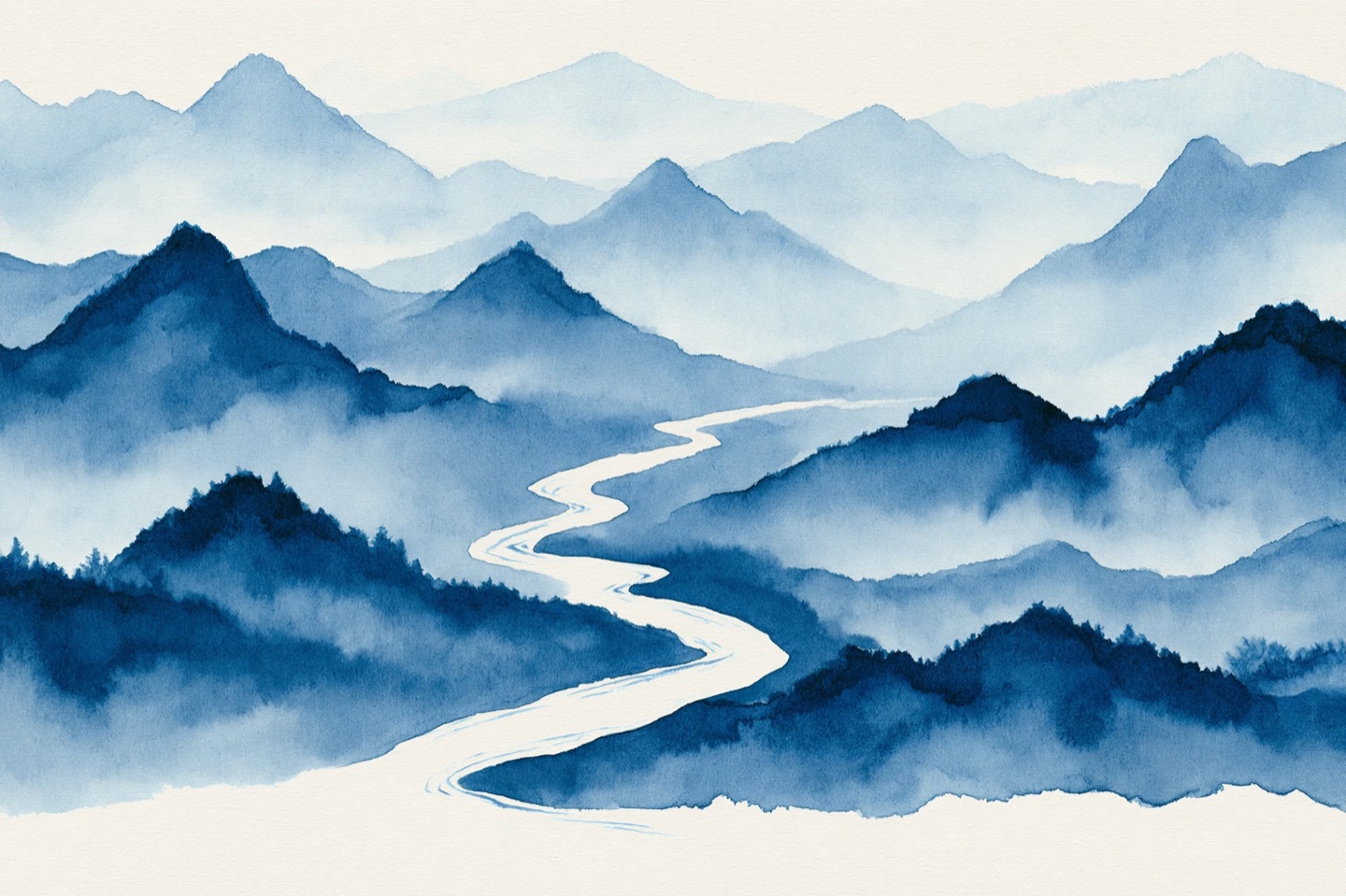
Its favorite image for the winning strategy is water. The highest good is like water: it benefits all things and does not contend, and settles in the low places that people disdain. Water takes the shape of whatever contains it, always flows down, seeks the position no one wants — and given time, it carves canyons out of rock. Nothing is softer than water, and nothing is better at wearing down the hard. The soft overcomes the hard; the weak overcomes the strong. A living tree is supple and bends in the storm; a dead one is stiff and snaps. The book is asking you to notice which of those you are trying to be.
The valley and the receptive
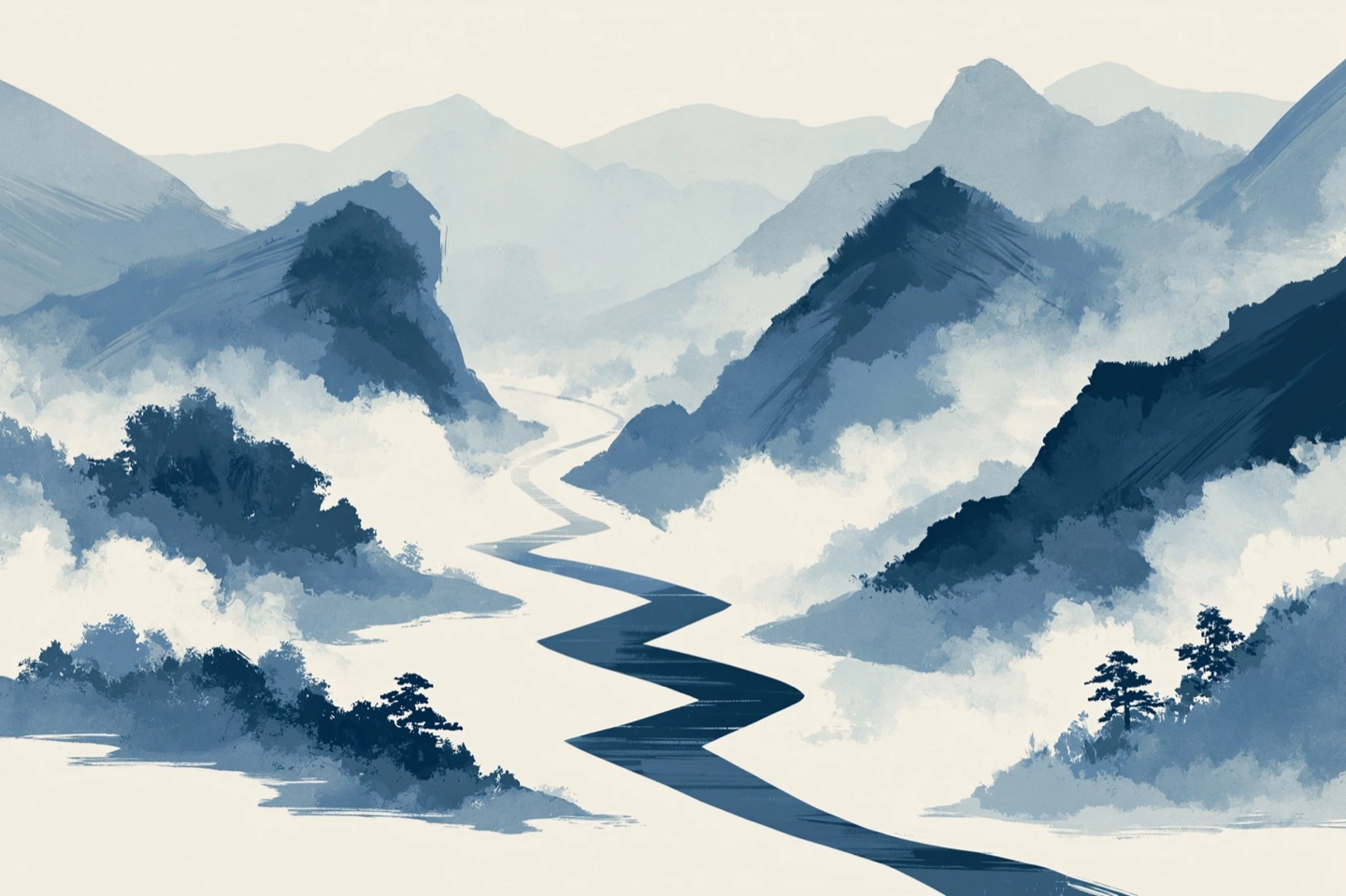
There is a family of images running through the book that a modern reader tends to skim past, and they carry the same idea in a different key. The book keeps praising the low, the empty, the dark, and the yielding, and it reaches for what it calls the feminine to do it. Know the masculine, keep to the feminine, and become the valley of the world. The valley is the recurring figure: the lowest ground, the place everything drains into, empty and receptive, and precisely because it is low and empty, inexhaustible — every stream ends there, and it is never full. What looks like the weak position, the passive and receiving one, turns out to be the position of endless supply.
This is not really about men and women. The book is describing two postures available to anyone: the assertive, hard, initiating one that the world admires, and the receptive, soft, yielding one that the world dismisses. The book's consistent bet is that the second is stronger over time, the way the ground is stronger than the plough that tears it, the way a mother outlasts and produces what the father merely fathers. It calls the source of things "the mysterious female," the dark opening from which everything is born and to which it returns. To align with the Dao is to stop performing dominance and learn the harder discipline of receptivity — to hold the low ground, absorb rather than resist, and let strength accumulate instead of spending it on display. In a culture then, as now, organized almost entirely around the opposite instinct, this was not a gentle suggestion. It was a reversal of what everyone took for granted about where power lives.
The usefulness of what is not there
There is a short chapter that turns on a simple observation, and it opens a door into the rest. Thirty spokes meet at a single hub, but it is the empty hole at the center that makes the wheel turn. You knead clay into a pot, but it is the hollow inside that makes it useful. You cut doors and windows into walls to make a room, but it is the empty space that you actually live in. In each case, the material — the spokes, the clay, the walls — gets all the attention, and the emptiness does the work.
This is the book's argument for emptiness, restraint, and space. What is absent is not nothing; it is often the functional part. A schedule with no gaps cannot absorb a surprise. A mind stuffed with opinions has no room to see what is in front of it. A life crammed with acquisitions and ambitions has crowded out the emptiness that made it livable. The book keeps returning to a related image, the "uncarved block" (朴) — raw wood before it has been cut into a specific tool. Once you carve the block into a bowl, it is a bowl and nothing else; its potential has collapsed into a single use. There is a value in staying uncarved, unspecialized, unnamed — in not rushing to become one fixed, finished, definable thing. Simplicity here is not aesthetic. It is the preservation of possibility.
Against knowing too much
The Tao Te Ching is deeply suspicious of cleverness, and this is the part modern readers find hardest to swallow. It distrusts learning, distinctions, moral campaigns, and conspicuous virtue. When the great Dao declined, benevolence and righteousness appeared — meaning that the loud moral vocabulary of a society, its endless talk of virtue and duty, is a symptom of the underlying harmony having already broken. Healthy things do not need to advertise their health. When everyone is talking about honesty, be worried.
The book is not anti-intellectual in the crude sense. Its target is a specific failure mode: the belief that we can name, measure, and manage our way to a good outcome, that more knowledge and more control reliably produce more flourishing. It has watched clever rulers with elaborate systems drive their states into ruin. It has seen that the more laws are proclaimed, the more thieves there are; that sharpening people's desires by dangling rare goods in front of them produces theft, not satisfaction. Its recommendation is subtraction. In pursuit of learning, every day something is added; in pursuit of the Dao, every day something is dropped. Get rid of the excess striving, the manufactured wants, the compulsion to intervene, and what remains tends to work. The hard thing is not acquiring the missing piece. The hard thing is having the discipline to remove what does not belong.
How to read it, and why it still lands
Do not read the Tao Te Ching front to back expecting an argument that builds. It does not have chapters in the way a modern book does; it has eighty-one short passages, aphoristic, often contradictory on the surface, circling the same handful of ideas from different angles. It rewards being read slowly, a passage at a time, and reread years later, when it will say something different because you have changed. It is designed to be lived against, not finished.
It also knows what it is doing to itself. A book whose first line warns that the Dao cannot be captured in words then spends five thousand words trying, and the contradiction is not an oversight. Those who know do not speak; those who speak do not know, it says, in writing, which is either a failure of nerve or a joke it is telling at its own expense. The most generous reading, and I think the right one, is that the words are not meant to hold the thing. They are meant to point at it and then get out of the way, the way a finger points at the moon and you would be a fool to study the finger. The book is a set of gestures toward something it cannot say, offered by someone who knew that and wrote it down anyway.
What is strange, reading it now, is how contemporary it feels — not because it is timeless in some vague spiritual way, but because it is a precise manual for acting inside systems too complex to fully control, and we spend our lives inside exactly those. Anyone who has watched a heavy-handed reorganization destroy a working team, or a well-meaning policy produce the opposite of its goal, or their own forcing of an outcome generate the resistance that defeated it, has run into the thing the book is pointing at. It is a theory of leverage for people who have understood that most of their control is an illusion, and that the real skill is knowing where the grain runs and applying the lightest possible touch along it. Written twenty-three centuries ago, by someone with no word for "system" and no concept of "feedback," it is one of the sharpest things ever said about both.
That is the book, minus the incense. It is not telling you to relax. It is telling you that the world has a shape, that fighting the shape is expensive and usually self-defeating, and that the rare people who learn to read the shape and move with it accomplish more, with less, than everyone straining around them. The softest thing in the world overcomes the hardest. It is worth sitting with how uncomfortable an idea that actually is.